It’s 2am, the bedroom’s still stuffy, and sleep isn’t happening. You’re renting so you can’t install anything, and the heat pump quote you got felt like overkill for a few hot weeks a year. A portable air conditioner is the middle path real cooling you can wheel into any room, plug in, and vent out a window. But only if you pick the right one, because a badly sized or poorly vented unit is just an expensive noisy fan.
This guide covers what actually matters when buying a portable air conditioner in NZ: whether they work, how to size one for your room, single- vs dual-hose, running costs, and the mistakes that leave people sweating. Straight answers, no sales spin.
Do portable air conditioners actually work in NZ?
Yes, a portable air conditioner genuinely cools a room, provided it’s sized correctly and vented properly out a window. The common complaint that “they don’t work” almost always comes down to a unit that’s too small for the room, a leaky window seal, or expecting one to cool a whole house. Get those right and they’re effective.
Two things make or break performance in New Zealand homes. First, sizing: an underpowered unit runs constantly and never quite gets there. Second, venting the hot air has to go outside, and any gap around the window hose lets it sneak back in. Humidity matters too, since our summers can be muggy, which is where a good dehumidifier mode earns its keep.
How does a portable air conditioner work?
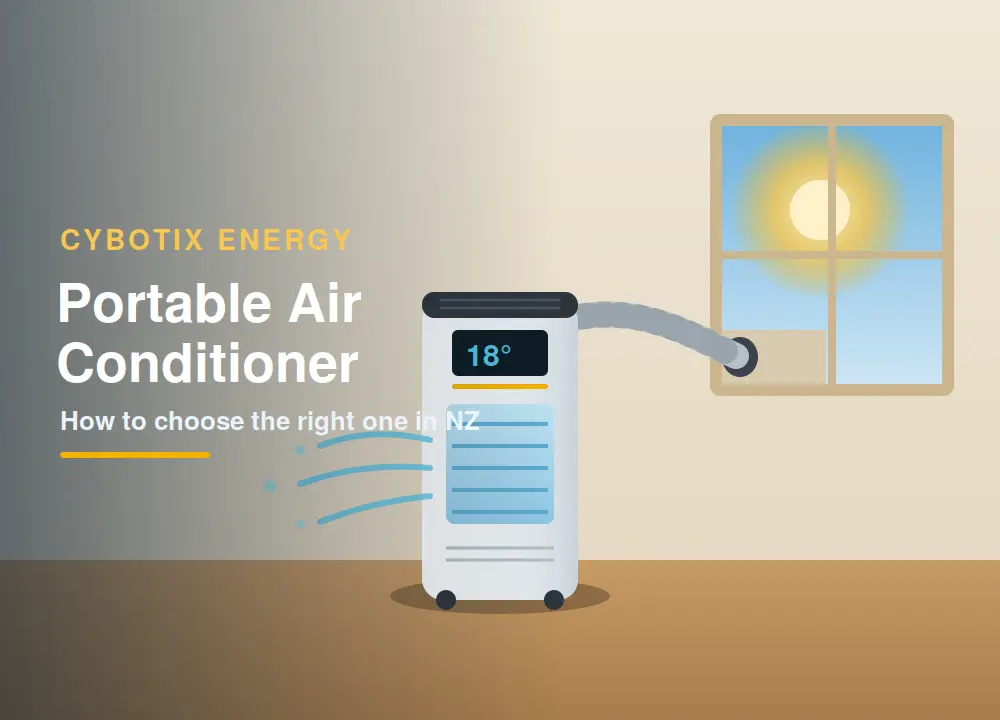
A portable AC pulls warm air from the room, passes it over cold coils to remove heat and moisture, then pushes the cooled air back out while venting the hot air outside through a hose. The exhaust hose fits a window using an adjustable kit, and any collected moisture is either drained or evaporated out with the exhaust.
The key detail is that hose. Because the unit expels heat through it, that hose must reach a window or opening a portable AC can’t cool a room without venting the hot air somewhere. How many hoses it uses changes how efficiently it does this, which brings us to single- versus dual-hose designs (more below).
Portable AC vs heat pump vs fan which do you need?
A portable air conditioner is the flexible middle option: real cooling with no installation, but for one room at a time. A split heat pump cools (and heats) far more efficiently and quietly but needs professional installation and costs more upfront. A fan or evaporative cooler is cheapest but only moves air rather than truly cooling it.
| Option | Upfront cost | Install | Cooling power | Running cost | Best for |
|---|---|---|---|---|---|
| Portable AC | Low–moderate | None (DIY window kit) | Good, single room | Moderate–high | Renters, occasional use, one room |
| Split heat pump | High | Professional | Excellent, efficient | Low (very efficient) | Long-term, whole-room, year-round |
| Fan / evaporative | Very low | None | Air movement only | Very low | Mild heat, dry conditions, budget |
If you own your home and want year-round comfort, a heat pump usually wins long term. If you rent, move often, or only need cooling for a few weeks, a portable air conditioner is the practical choice.
What size portable air conditioner do you need?
Match the unit’s cooling capacity to your room size. Too small and it runs flat out without cooling; too large wastes money and can leave the room clammy. As a rough guide, you need more capacity for larger, sunnier, or poorly insulated rooms.
Understanding kW and BTU
Cooling capacity is shown in kilowatts (kW) or BTU (British Thermal Units) both measure how much heat the unit can remove. Higher numbers mean more cooling. As a rough conversion, 1 kW is around 3,400 BTU. When you see a portable AC rated at, say, 2.6 kW or ~9,000 BTU, that number tells you the room size it suits.
A quick room-size sizing guide
Use this as a starting point, then size up if the room is sunny, has large windows, or is poorly insulated:
- Up to ~15 m² (small bedroom, study): ~2.0–2.6 kW (~7,000–9,000 BTU)
- ~15–25 m² (larger bedroom, small lounge): ~2.6–3.5 kW (~9,000–12,000 BTU)
- ~25–35 m² (open lounge/living): ~3.5–4.4 kW (~12,000–15,000 BTU)
What to look for when buying a portable air conditioner in NZ
Prioritise the right cooling capacity, energy efficiency, and hose design, then weigh noise and features like a dehumidifier mode. These decide whether the unit cools well, runs affordably, and is liveable in a bedroom.
Cooling capacity and energy efficiency
Capacity gets the room cool; efficiency decides what it costs to run. Portable ACs draw a fair bit of power, so check the energy rating and the running wattage. A more efficient unit costs more upfront but less every summer worth it if you’ll use it a lot.
Single-hose vs dual-hose
This affects efficiency. A single-hose unit vents hot air out but draws replacement air from inside the room, creating negative pressure that pulls warm air in through gaps. A dual-hose unit draws outside air for cooling the coils and vents separately, which is more efficient in larger or hotter rooms though single-hose units are cheaper and fine for smaller spaces.
Dehumidifier mode
New Zealand summers can be humid, and damp heat feels worse than dry heat. Many portable ACs include a dehumidifier mode that pulls moisture from the air, which makes a muggy room feel far more comfortable and is useful in the shoulder seasons too.
Noise level
If it’s going in a bedroom, noise matters. Portable ACs aren’t silent the compressor and fan sit inside the room with you. Check the decibel (dB) rating and look for a quieter model or a night/sleep mode if you’re sensitive to noise while sleeping.
Venting, window kits, and drainage
Check the included window kit fits your windows NZ homes have a mix of sliding and awning windows, and a poor seal wrecks performance. Also check how the unit handles condensate: some evaporate it out the exhaust, others need periodic draining or a continuous drain hose.
How much do portable air conditioners cost in NZ and to run?
Portable air conditioners in New Zealand typically cost from around $400 for a basic unit to $1,000+ for a larger, more efficient, or quieter model. Running costs depend on the unit’s power draw, how long you run it, and your power price they generally cost more to run than an efficient heat pump.
| Tier | Typical price (NZD) | Capacity | Best for |
|---|---|---|---|
| Budget | ~$400–$600 | ~2.0–2.6 kW, single-hose | Small bedrooms, occasional use |
| Mid-range | ~$600–$850 | ~2.6–3.5 kW, quieter, dehumidifier | Most bedrooms and small lounges |
| Premium | ~$850–$1,200+ | ~3.5 kW+, dual-hose, efficient, quiet | Larger rooms, frequent use |
Because portable ACs are power-hungry, running cost is where they add up. If you have solar, running the unit during sunny afternoons can offset much of that cost one reason cooling and home energy go hand in hand. For a look at how solar could cut your summer running costs, see Cybotix Energy’s home energy solutions.
Pros and cons of portable air conditioners
Worth weighing honestly before you buy.
Pros:
- No installation — plug in and go
- Renter-friendly; nothing drilled or fixed
- Move it room to room as needed
- Lower upfront cost than an installed system
- Often include dehumidifier and fan modes
Cons:
- Cools one room at a time
- Noisier than a split system (the compressor’s in the room)
- Higher running costs than an efficient heat pump
- Needs a window for venting
- Takes up floor space and needs the window kit sealed well
Getting the most from your portable AC
A few habits make a big difference to how well and how cheaply a portable air conditioner cools:
- Seal the window gap — block any space around the hose kit so hot air can’t sneak back in
- Pick the right room — cool the room you’re actually in, with the door closed
- Close curtains and blinds — keep the sun’s heat out, especially on west-facing windows
- Keep the exhaust hose short and straight — kinks and long runs cut efficiency
- Drain and clean regularly — empty the water as needed and rinse the filter for steady performance
Common mistakes to avoid
- Undersizing — buying too small for the room, so it never cools properly
- Poor venting — a leaky window seal undoes the cooling
- Ignoring running cost — the cheapest unit can cost the most to run
- Expecting whole-home cooling — a portable AC is a single-room tool
- Neglecting the filter — a clogged filter drops performance and airflow
FAQs
What size portable air conditioner do I need for a bedroom?
For a typical bedroom up to around 15 m², a unit of about 2.0–2.6 kW (roughly 7,000–9,000 BTU) is usually enough. Size up if the room is large, sunny, or poorly insulated.
Are portable air conditioners expensive to run in NZ?
They use more power than an efficient heat pump, so running costs are moderate to high depending on the unit and how long you run it. Choosing an energy-efficient model and running it only in the room you’re using keeps costs down.
Do portable air conditioners need to be vented out a window?
Yes. A portable AC removes heat by venting it outside through an exhaust hose, so it needs a window or opening. Without venting, it can’t actually cool the room it just moves heat around.
Single-hose or dual-hose which is better?
Dual-hose units are more efficient, especially in larger or hotter rooms, because they don’t pull warm air in through gaps. Single-hose units are cheaper and work fine for smaller rooms and lighter use.
Can a portable air conditioner cool a whole house?
No. Portable ACs are designed to cool one room at a time. For whole-home cooling, you’d need multiple units or an installed system like ducted or multi-split heat pumps.
Portable AC or heat pump which should I get?
If you rent, move often, or only need cooling occasionally, a portable AC makes sense. If you own your home and want efficient year-round heating and cooling, a heat pump is usually the better long-term investment.
Do portable air conditioners help with humidity?
Yes. They remove moisture as they cool, and many include a dedicated dehumidifier mode helpful during muggy NZ summers when damp heat feels worse than the temperature suggests.
Ready to beat the heat?
The right portable air conditioner comes down to matching cooling capacity to your room, venting it well, and factoring in what it costs to run. If you’d like help weighing cooling options or cutting the running cost with solar get in touch with the team at Cybotix Energy and we’ll help you find the setup that suits your home and budget.