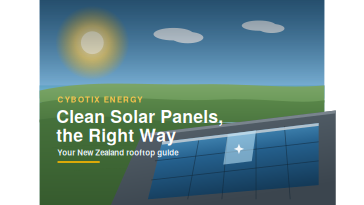
Your panels are probably losing output right now, and you can’t see it happening. A thin film of salt, pollen, and bird mess builds up slowly, so the drop never shows up as a single bad day just a quietly smaller number on your monitoring app over months. Knowing how to clean solar panels the right way protects that output and, just as importantly, keeps you from voiding a warranty with one wrong move.
Clean Solar Panels
This guide is written for New Zealand conditions:
our salt-laden coastlines, spring pollen, damp bush-edge lichen, and the reality that most homes here have panels on a sloped roof that isn’t safe to walk on. Here’s when to clean, how often, how to do it without damaging anything, and when it’s smarter to leave it alone or call someone in.
Do solar panels actually need cleaning?
Yes, but less often than people assume, and rain does part of the job for you. Rain rinses off loose dust, but it doesn’t remove sticky residue like bird droppings, pollen paste, or salt film, which is what actually costs you output. Most systems benefit from a proper clean once or twice a year, depending on where you live.
The reason dirty panels matter is simple. A photovoltaic panel converts light into electricity, and anything blocking that light reduces production. A uniform layer of dust might trim output by a few percent; a concentrated blob a bird dropping, a smear of tree sap can shade an entire cell and drag down a whole string more than its size suggests.
How much output you lose to dirty panels
Independent studies generally put soiling losses in the low single digits for homes in rainy climates, rising higher in dry, dusty, or coastal areas where residue accumulates faster than rain can clear it. New Zealand’s high rainfall in many regions works in your favour but not everywhere, and not for every type of grime.
NZ conditions that dirty panels fastest
- Coastal salt spray — Homes near the sea (think Coromandel, Tasman, much of Auckland) get a fine salt film that dulls glass and attracts more dust.
- Pollen — Spring pollen forms a sticky yellow layer that rain smears rather than removes.
- Bird droppings — The worst offender per square centimetre; opaque and acidic if left.
- Rural and agricultural dust — Paddock dust, harvest season, and unsealed roads coat panels quickly.
- Lichen and moss — In damp, shaded, bush-fringe areas, organic growth can take hold along panel edges over time.
How often should you clean solar panels in New Zealand?
For most NZ homes, once or twice a year is enough, timed after the messiest season for your area. Coastal and rural properties lean towards twice; homes in high-rainfall regions with clean surroundings can often get by with an annual check. Let your monitoring data guide you rather than a fixed calendar.
| Your situation | Suggested frequency | Why |
|---|---|---|
| Coastal / salt exposure | 2× per year | Salt film builds steadily and rain doesn’t fully clear it |
| Urban / suburban | 1–2× per year | Moderate dust and pollen; depends on tree cover |
| Rural / farm | 2–3× per year | Paddock dust, machinery, and seasonal spraying |
| Bush-fringe / shaded, damp | 1–2× per year + watch for lichen | Organic growth needs earlier intervention than dust |
| Low-rainfall region (e.g. parts of Central Otago) | 2× per year | Less rain means less natural rinsing |
A practical rule: if your output is tracking noticeably below the same month last year and there’s no fault or shading change, dirt is a likely culprit.
When to clean and when to leave it
Clean early in the morning or on a cool, overcast day. Panels heat up fast in sun, and spraying cold water onto hot glass creates thermal stress that can, over time, contribute to micro-cracks. Cool glass also means water doesn’t evaporate instantly and leave mineral spots.
Leave it alone when panels are hot to the touch, when the roof is wet or icy, or when the wind is up a slippery roof is not worth a few percent of output. If you’re ever weighing “risk to me” against “a bit more power,” the power loses every time.
How to clean solar panels safely, step by step
The safest clean is gentle: plain water, a soft brush or squeegee on a pole, and no chemicals. Where you can reach panels from the ground or a stable platform, most of this is straightforward. Where you can’t, skip to the professional section roof falls are the real hazard here, not dirty glass.
What you’ll need
- A soft-bristled brush or a squeegee with a soft rubber blade, ideally on an extendable pole
- Clean water deionised or filtered if your area has hard water (more on this below)
- A garden hose with a gentle spray, not a pressure washer
- Optional: a bucket of lukewarm water for stubborn spots
Never use: detergents, dish soap, solvents, abrasive pads, or anything scented. Residue films the glass and some chemicals damage the anti-reflective coating.
Step-by-step method
- Check your system first. Look at your inverter and monitoring app so you have a baseline reading. Some manufacturers recommend shutting the system down before cleaning — check your inverter manual, and if in doubt, clean early when production is low.
- Rinse first. Wet the panels with a gentle spray to loosen and float off grit. This matters brushing dry grit is how you scratch glass.
- Wash gently. Use the soft brush or squeegee with light pressure. Work in the direction that lets water run off, and don’t scrub blobs hard soak and lift them instead.
- Rinse again. Clear all residue with clean water.
- Inspect. Look for cracks, discolouration, lifting frames, or scorch marks around junction boxes. Cleaning is a good moment to spot a fault early.
- Check output. After the panels dry, compare your reading to the baseline.
Water quality matters
Hard water leaves mineral spots as it dries, which look like the dirt you just removed. In areas with hard tap water, a final rinse with deionised or filtered water leaves the glass spot-free. It’s a small detail that separates a good clean from a streaky one and it’s why many professional kits carry their own purified water supply.
DIY vs hiring a professional cleaner
If your panels are reachable from the ground with a pole, DIY is reasonable and cheap. If they’re on a steep or high roof, hire a professional the cost is far lower than the cost of a fall, and pros carry the gear to do it safely without stepping on the panels.
DIY — pros and cons
- Pros: cheap, do it on your schedule, forces you to check your own system regularly.
- Cons: roof-access risk, easy to scratch glass or leave water spots, no insurance if something goes wrong.
Professional — pros and cons
- Pros: trained roof access, purified water, spots faults, protects your warranty by using approved methods.
- Cons: costs money, you have to book it in.
| Factor | DIY | Professional |
|---|---|---|
| Cost | Low (your time + basic kit) | Moderate (per-visit fee) |
| Safety | You carry the risk | Trained, insured access |
| Result quality | Variable | Consistent, spot-free |
| Fault detection | Only if you know what to look for | Trained eye |
| Warranty safety | Risk if wrong method used | Approved methods |
Mistakes that damage panels (and void warranties)
Some cleaning habits do more harm than the dirt ever would, and several can void your manufacturer warranty:
- Pressure washers — Force water past seals and can crack cells. The most common expensive mistake.
- Abrasive pads or stiff brushes — Scratch the glass and the anti-reflective coating permanently.
- Harsh chemicals and detergents — Leave films and degrade coatings.
- Walking on panels — Causes micro-cracks you won’t see until output drops months later.
- Cleaning hot glass with cold water — Thermal shock stress.
Beyond cleaning — keeping output healthy
Cleaning is one part of getting the most from your system. Keep an eye on your monitoring data month to month, trim any vegetation that’s started shading the array (a new branch can cost more than a season of dust), and treat a sudden output drop that cleaning doesn’t fix as a possible fault rather than dirt. Panels are durable, but inverters, connectors, and wiring do age.
If your output has fallen and a clean hasn’t brought it back, it’s worth a proper system check. The team at Cybotix Energy can help you diagnose a drop in solar performance and sort out whether it’s soiling, shading, or a hardware issue.
FAQs
Can I clean solar panels with tap water in NZ?
Yes, tap water is fine for the wash, but in hard-water areas it can leave mineral spots as it dries. A final rinse with deionised or filtered water prevents spotting.
Does rain clean solar panels?
Partly. Rain rinses off loose dust but doesn’t remove sticky residue like bird droppings, pollen paste, or salt film — which are exactly the things that cost you the most output.
Is it safe to clean solar panels myself?
It’s safe if you can reach them from the ground or a stable platform with a pole. If cleaning means walking on a steep or high roof, hire a professional — the fall risk outweighs any output gain.
Do I need to turn the system off before cleaning?
Some manufacturers recommend it. Check your inverter manual; if you’re unsure, clean early in the morning when production is low and keep water away from cabling and junction boxes.
Can dirty panels damage the system?
Dirt itself mostly costs output rather than causing damage, but concentrated shading from bird droppings or lichen can stress cells over time. Abrasive or high-pressure cleaning does far more damage than the dirt ever would.
How much output will cleaning actually recover?
It depends on how dirty they were and your location. Homes in dry, coastal, or rural areas typically see the biggest gains; a home in a clean, high-rainfall area may see very little which is a good sign your panels are staying clean on their own.
How often should I clean solar panels in New Zealand?
Once or twice a year for most homes, more often for coastal and rural properties. Let your monitoring data, not a fixed schedule, tell you when it’s time.
Ready to get the most from your solar?
If your panels aren’t producing what they used to, a clean is a good first step and a system health check is the next one. Talk to the Cybotix Energy team about keeping your solar performing at its best.