The solar inverter is the part of your system most likely to fail, and the part most quote sheets barely mention. Panels get the glory, but the inverter does the hard work every daylight hour: turning DC from your roof into AC your home can use, keeping the system safe, and deciding how well it plays with the grid and any battery you add later. Pick the right solar inverter in NZ and you get 15+ years of quiet, efficient power. Pick wrong and you get warranty headaches, a stalled grid connection, or a system you can’t expand.
This guide walks you through the types, the brands worth shortlisting, the NZ rules that trip people up, and how to size and choose with confidence.
What a solar inverter actually does
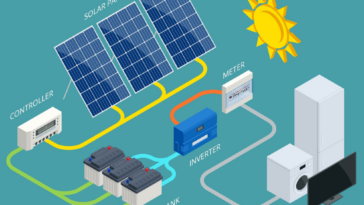
A solar inverter converts the direct current (DC) your panels produce into the alternating current (AC) your appliances and the grid use. It also runs maximum power point tracking (MPPT) to squeeze the most from your panels, handles safety functions like anti-islanding, and manages how your system talks to the grid and your battery.
Think of it as the brain of the system. The panels are just the muscle. Three jobs matter most:
- Conversion efficiency — good modern inverters convert at around 96–98%, so very little energy is lost in the process.
- MPPT — tracks the optimal voltage and current every few seconds, which matters a lot when part of your roof is shaded by a chimney, tree, or passing cloud.
- Safety and grid management — shuts down safely during a power cut, controls export to the grid, and reports faults.
Because it works hardest, the inverter is usually the first component to need replacing. That’s why brand quality and local support deserve real weight in your decision.
Types of solar inverters available in NZ
There are four main types you’ll come across in New Zealand: string, hybrid, microinverters, and off-grid. Most new home installs now use a hybrid inverter because it’s battery-ready, but the right choice depends on your roof, your budget, and whether you ever plan to add storage or go off-grid.
String inverters
A single box that all your panels (wired in “strings”) connect to. They’re the most affordable and most common grid-tied option. The catch: shading on one panel can drag down the whole string, and they don’t support batteries on their own.
Hybrid inverters
These do everything a string inverter does, plus they’re built to work with a battery and can provide backup power during an outage. For most NZ homeowners installing today even those not buying a battery yet a battery-ready hybrid is the sensible default, because it keeps your options open.
Microinverters
A small inverter sits under each panel, so every panel performs independently. That’s a strong fit for complex or shaded roofs, and you get panel-level monitoring. They cost more per watt but remove the single-point-of-failure risk of a string setup.
Off-grid solar inverters
Designed to run a property with no grid connection at all. They lean heavily on battery storage and have to handle every kilowatt your home draws on its own. Common on rural blocks and remote baches. More on these below.
Grid-tied vs hybrid vs off-grid: which fits your situation
Choose grid-tied (string) if you want the lowest upfront cost and no battery. Choose hybrid if you want backup power or plan to add a battery now or later. Choose off-grid only if connecting to the grid is impractical or too expensive. Here’s how they compare.
| Inverter type | Works with a battery? | Backup during a power cut? | Best for | Indicative cost (inverter only)* |
|---|---|---|---|---|
| String (grid-tied) | No (not on its own) | No | Lowest-cost urban homes, no battery plans | Lower |
| Hybrid | Yes | Yes (with battery) | Most new NZ homes; future-proofing | Mid |
| Microinverter | Via AC coupling | Limited | Shaded or complex roofs | Mid–high |
| Off-grid | Yes (essential) | N/A — you’re always “off” | Rural blocks, remote sites, no grid | High (system) |
Off grid solar inverter in NZ: what’s different
An off grid solar inverter in NZ has to be sized for your peak demand, not your average, because there’s no grid to fall back on. It works hand-in-hand with a battery bank that you size for autonomy usually a few days of cloudy-weather reserve. Get the sizing wrong and you’ll run out of power on a wet West Coast week.
Key differences to plan for:
- Battery dependence. The inverter and battery are a matched system. Your battery capacity, not just panel count, determines whether you have power at 9pm.
- Surge handling. Off-grid units need headroom for motor-driven loads — water pumps, fridges, power tools — that spike well above their running draw.
- Generator integration. Many lifestyle-block setups keep a backup generator. A good off-grid inverter manages automatic generator start for the worst stretches of winter.
- Honest load assessment. The most common off-grid mistake is underestimating real usage. Map every load before sizing.
Top solar inverter brands in NZ
For most New Zealand homes, the realistic shortlist is Fronius at the premium end, Sungrow and GoodWe for strong value, and AlphaESS for built-in-battery hybrids. Deye (often sold as Sunsynk) is a popular value option for hybrid and off-grid, with a couple of caveats worth knowing. Here’s how they stack up.
Fronius
Austrian-made, premium, and a long-time favourite of NZ installers for a reason: very low field failure rates, active fan cooling that helps in hot roof spaces, and local support with fast replacement turnaround. The GEN24 range is battery-ready, though full hybrid functionality on some models sits behind a paid software upgrade. You pay more, but you tend to pay once.
Sungrow and GoodWe
Two of the best value-for-money options on the NZ market. GoodWe is well liked for its three MPPTs, which give you more flexibility in how panels are arranged on awkward roofs, plus solid app monitoring. Sungrow offers a wide, reliable hybrid range and long warranty terms. Both are sensible mid-range picks.
Deye solar inverter in NZ
A Deye solar inverter in NZ gives you capable hybrid and off-grid hardware at a lower price than the premium brands, which is why it’s popular with off-grid and DIY-leaning buyers. Two things to check before you commit: confirm the exact model has a current Declaration of Conformity to AS/NZS 4777.2 so your lines company will approve it, and confirm the local warranty and support pathway. Cheap hardware is no bargain if a fault means shipping the unit overseas. A reputable installer will source compliant stock and stand behind it.
| Brand | Type range | Typical warranty | Monitoring | Price tier | Best for |
|---|---|---|---|---|---|
| Fronius | String, hybrid | 10 yrs (extendable) | Solar.web app | Premium | Buyers who want lowest failure risk + NZ support |
| Sungrow | String, hybrid | ~10 yrs | iSolarCloud app | Mid | Reliable value, wide range |
| GoodWe | String, hybrid | 10 yrs (extendable) | SEMS app | Mid | Flexible roof layouts (3 MPPT) |
| AlphaESS | Hybrid (battery built in) | Varies | Monitoring app | Mid | All-in-one hybrid with integrated battery |
| Deye / Sunsynk | Hybrid, off-grid | Varies — check NZ support | App | Value | Off-grid and budget hybrid (verify compliance) |
NZ rules you can’t skip: AS/NZS 4777 and your lines company
Every grid-connected solar inverter in New Zealand must comply with AS/NZS 4777.2 (the inverter performance standard) and be installed to AS/NZS 4777.1. Your inverter also needs sign-off from your local lines company before it can export to the grid. Skipping this isn’t an option non-compliant gear gets connection applications rejected.
What this means in plain terms:
- AS/NZS 4777.2:2020 sets how inverters behave on the grid, including anti-islanding (the inverter must stop exporting within set limits when the grid goes down, and wait at least 60 seconds before reconnecting). Amendment 2 brought additional requirements, with full compliance expected of inverters installed from late August 2025 onward.
- Declaration of Conformity. Your inverter needs a Declaration of Conformity from a recognised test lab. Some lines companies keep approved-inverter lists; if your model isn’t on it, your installer supplies the paperwork.
- AS/NZS 4777.1:2024 covers the installation itself — isolation, labelling, point of connection — and is being adopted into NZ’s electrical safety framework.
- Voltage and export settings. From late 2025, NZ moved to a higher voltage setting (a 258V 10-minute average), and your lines company may apply export limits at your connection point.
- Lines company approval. Distributed generation connection runs through the Electricity Authority’s Part 6 Code and your specific lines company’s process. Applications, a Certificate of Compliance, and a Record of Inspection are part of the deal.
How to choose and size your inverter: a simple checklist
The right inverter matches your panel array, your phase supply, and your future plans — then earns its keep on warranty and local support. Work through these in order:
- Match it to your array. Inverter capacity should sit a bit below your panel capacity (e.g. a 5kW inverter commonly supports up to ~6.6kW of panels). Your installer sizes this properly.
- Single-phase or three-phase? If your home has three-phase supply, a three-phase inverter is usually worth the small premium for better balance.
- Battery-ready or not. If there’s any chance you’ll add storage, choose a hybrid now.
- MPPT count. More MPPTs (and a wide voltage range) give you flexibility on shaded or multi-orientation roofs.
- Monitoring. Make sure you get an app that shows generation, consumption, and fault alerts.
- Warranty and local support. A 10-year warranty means little if repairs take months. Favour brands with NZ-based service.
- Compliance. Confirm AS/NZS 4777.2 conformity and lines-company eligibility before you sign.
Pros and cons at a glance:
- Premium brands (e.g. Fronius): + lowest failure risk, fast support; − higher upfront cost.
- Value brands (e.g. Sungrow, GoodWe, Deye): + strong price-to-feature ratio; − support and compliance vary, so vet carefully.
- Microinverters: + panel-level resilience and monitoring; − higher cost, more units to maintain.
What a solar inverter costs in NZ
As a rough guide, a quality 5kW grid-tied string inverter is the lower-cost option, a battery-ready hybrid sits in the middle, and a premium hybrid or full off-grid system costs the most. Exact pricing depends on size, brand, phase, and whether storage is included so treat any figure as a starting point, not a quote.
What pushes the price up or down:
- System size (kW) and number of MPPTs
- Hybrid vs string — battery capability adds cost
- Single vs three-phase — three-phase typically adds a modest premium
- Brand tier — premium units cost more but often last longer
- Off-grid extras — batteries and generator integration are the big-ticket items
One piece of hard-won advice: never buy the cheapest inverter on the market. The gap in lifespan and support between budget-bin and reputable gear is where people get burned over a 15-year horizon.
Frequently asked questions
How long do solar inverters last in NZ?
A quality inverter typically lasts 10–15 years, sometimes longer, while panels often last 25+ years. That mismatch is why many homeowners replace the inverter at least once over the system’s life and why build quality matters most here.
Can I add a battery to my existing inverter?
It depends on the type. A hybrid inverter is battery-ready by design. A standard string inverter usually can’t take a battery directly; you’d add an AC-coupled battery or replace the inverter. If storage is on your horizon, start with a hybrid.
Is Deye a good inverter for NZ?
Deye (and the Sunsynk-branded versions) offer capable hybrid and off-grid hardware at a competitive price, which makes them popular for off-grid setups. The two things to confirm are AS/NZS 4777.2 compliance for your exact model and a clear local warranty/support path. With those checked, they’re a reasonable value choice.
Do I need an off-grid inverter for a lifestyle block?
Only if you are not connecting to the grid. Many lifestyle blocks still have grid power and use a hybrid inverter with a battery for backup, which is simpler and cheaper than a true off-grid system. Go off-grid when connection costs are prohibitive or no line exists.
What size inverter do I need?
It’s sized to your panel array and household usage, with inverter capacity usually slightly below total panel capacity. A common residential setup pairs around 6.6kW of panels with a 5kW inverter, but your installer should size it to your roof and consumption.
Are cheap imported inverters worth it?
Rarely. Beyond reliability concerns, an inverter without proper AS/NZS 4777.2 certification can stop you legally connecting to the grid, and overseas-only warranty support means long downtime if it fails. The savings usually aren’t worth the risk.
String, hybrid, or microinverter which is most popular in NZ?
Battery-ready hybrid inverters have become the default for new residential installs because they future-proof for storage and backup. String inverters still suit budget-focused, no-battery setups, and microinverters shine on shaded or complex roofs.
Get the right inverter for your home
The inverter decision shapes how long your system lasts, whether you can add a battery, and how smoothly you connect to the grid. If you’d rather not guess, get a design built around your roof, your power use, and your plans. The team at CybotixEnergy can recommend a compliant inverter and size a system that fits grid-tied, hybrid, or off-grid.
Shop solar inverters at Cybotix Energy
Ready to move from research to install? Cybotix Energy stocks Deye hybrid and off-grid inverters sized for NZ homes and lifestyle blocks — backed by local warranty support and AS/NZS 4777.2 compliant stock, so your grid connection clears without surprises.
Pair your inverter with LONGi solar panels, add Bluetti storage for backup power, or talk to us about a complete grid-tied, hybrid, or off-grid setup designed around your roof and your power use.
Shop Deye Inverters → Browse the full range →
Not sure which model fits? Get in touch and we’ll size it for you.